
This has been a common theme in most of our conversations with enterprise leaders trying to improve their workflows using AI, making AI one of the most exclusive technologies in spite of all the hype.
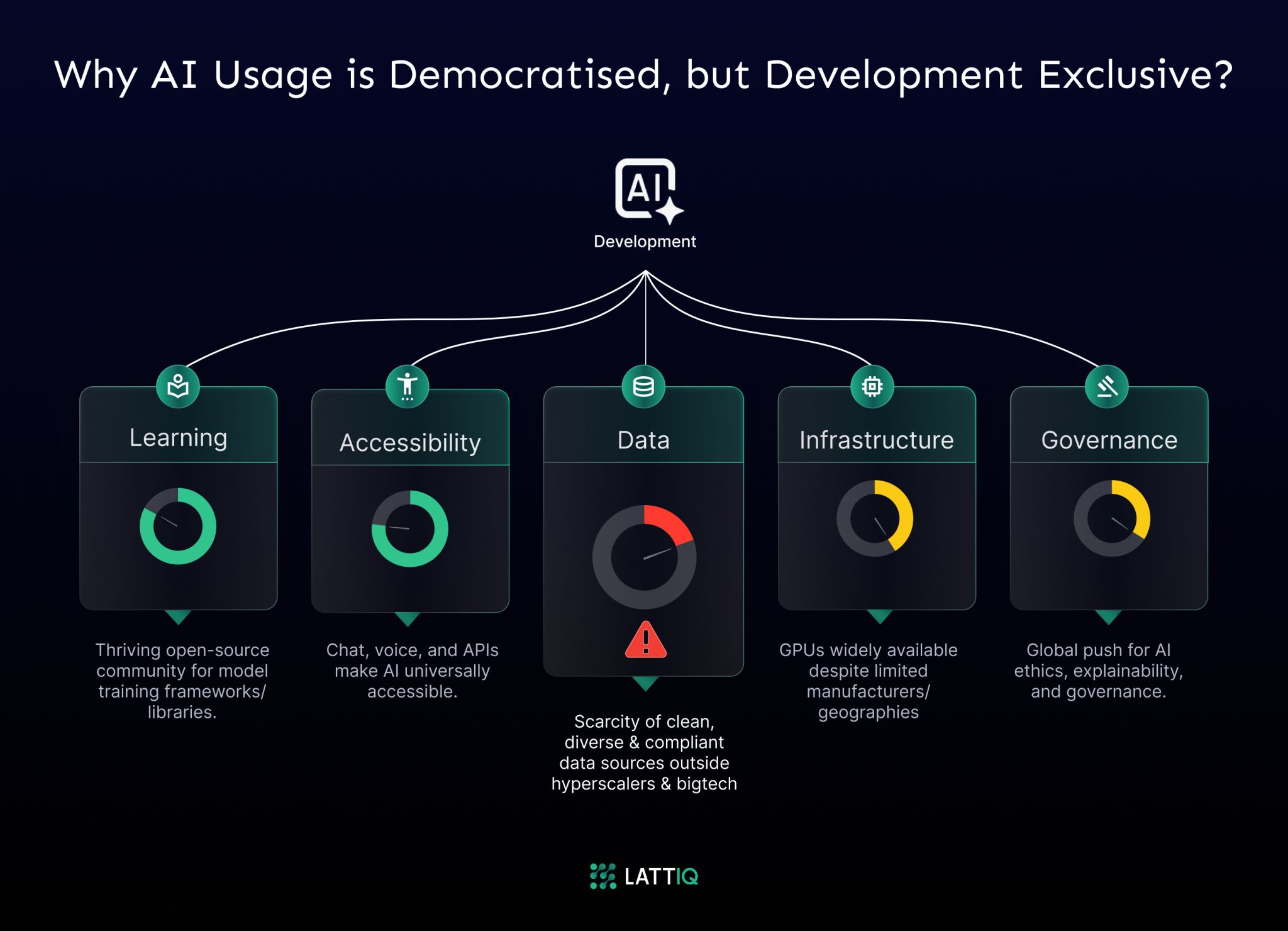
The answer lies in the key pillars that define AI development. The AI landscape stands on 5 critical pillars, but not all are equally robust. Here's a breakdown of the paradox that's shaping all of our futures:
Strong Foundations
1. Learning: Contributions from collaborative public projects and a vibrant community fosters continuous evolution of open-source learning frameworks removing barriers of licensing or resources. LLaMA from Meta is a prime example of how high-performing models are increasingly being shared with the public.
2. Accessibility: Chat, voice, and user-friendly APIs have made AI tools accessible to 100s of millions worldwide. People no longer need specialized technical skills to leverage AI's capabilities in their day-to-day lives.
Works in Progress
3. Infrastructure: GPUs are widely available today across cloud platforms. Despite this convenience, hardware is still dominated by a handful of companies, exposing AI compute resources to geopolitical influences and potential supply chain disruptions.
4. Governance: AI ethics is under intense global debate, with different regions proposing varied regulations and standards. The EU has taken a lead role through its AI Act - signaling where global policy may be heading.
The Real Challenge
5. Data
a. Data asymmetry remains a key obstacle. A few major players possess the most comprehensive, high-quality datasets, while everyone else struggles with siloed, unstructured, or insufficient data. To train state-of-the-art models, we need to come together - creating a critical mass of clean & diverse data through consortiums and privacy-first platforms.
b. GenAI != AI: While most GenAI excel at content creation, they are less reliable for decision-critical applications like personalization, risk assessment, forecasting, etc. Clean, Diverse and Fresh Proprietary datasets are not just a resource but a cornerstone for building predictive and prescriptive models crucial for high-stakes decision-making.
At LattIQ, we're focused on solving the data puzzle. We believe AI shouldn't be reserved for the few. That's why we're exploring decentralized methods that let organizations benefit from each other's data without actually sharing or losing control of it.
Our goal? Level the playing field and make responsible data access as seamless and equitable as the rest of the AI stack - so developers everywhere can move from merely using AI to shaping it.